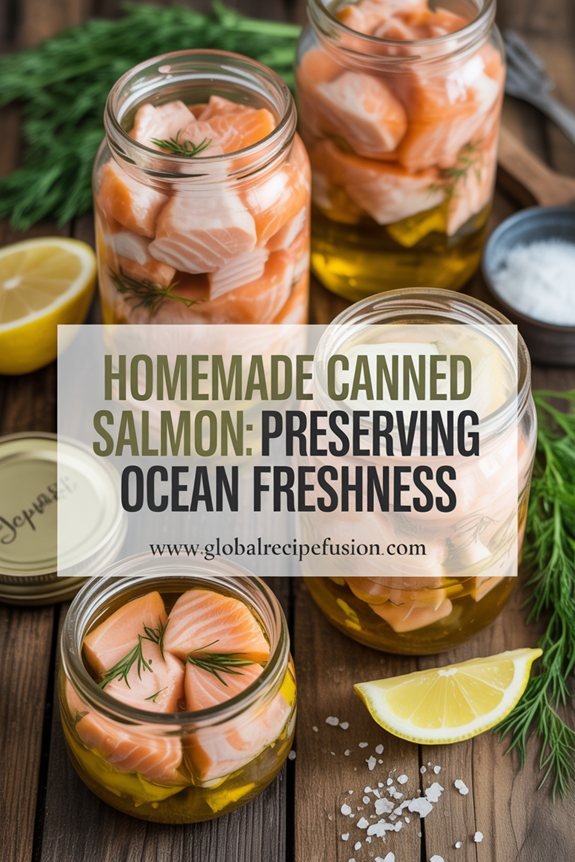
Why You’ll Love this Homemade Canned Salmon
The humble art of canning salmon at home transforms an ordinary kitchen task into a deeply satisfying tradition that connects us to generations of resourceful cooks.
You’ll appreciate how this simple preservation method captures salmon at its peak freshness, creating a versatile pantry staple that’s ready whenever inspiration strikes.
Unlike store-bought versions, your homemade salmon offers complete control over ingredients—no mysterious additives or excessive salt.
The vinegar gently softens any overlooked bones while the olive oil maintains that coveted moisture.
And that tablespoon of catsup? It’s not just for color—it adds a subtle depth that enhances your creation beyond basic canned fish.
Recipe Information for Homemade Canned Salmon
Home canning salmon is a traditional preservation technique that dates back generations, allowing households to enjoy this nutritious seafood year-round. The pressure canning method guarantees safe preservation while maintaining the fish’s delicate flavor and texture.
- Prep Time: 20 minutes (cleaning, cutting salmon into chunks, preparing jars)
- Cook Time: 90 minutes (pressure canning at 10 pounds pressure)
- Category: Preserved Food
- Method: Pressure Canning
- Cuisine: Traditional Home Preservation
- Yield: Multiple quart jars (dependent on amount of salmon utilized)
What Ingredients are in Homemade Canned Salmon?
Homemade canned salmon requires just a few simple ingredients to create a shelf-stable, nutritious food that can be enjoyed throughout the year.
The basic recipe combines fresh salmon with minimal additives that help preserve the fish’s texture, color, and flavor while ensuring proper preservation during the pressure canning process.
- Salmon fillet, boned and trimmed, cut into 1-inch chunks
- 1 tablespoon salt (per quart jar)
- 1 tablespoon white vinegar (per quart jar)
- 1 tablespoon olive oil (per quart jar)
- 1 tablespoon catsup (per quart jar)
When selecting salmon for canning, it’s best to employ fresh, high-quality fish with minimal bones.
The salt acts as a preservative and flavor amplifier, while the vinegar helps soften any small bones that may have been missed during preparation.
The olive oil keeps the salmon moist during storage, preventing it from becoming dry, and the catsup adds a touch of color to make the final product more visually appealing.
How to Make this Homemade Canned Salmon
Making homemade canned salmon is a straightforward process that requires proper preparation and careful attention to food safety through pressure canning. This preservation method allows you to enjoy salmon year-round while maintaining much of its nutritional value. The process involves preparing the salmon, packing it into sterilized jars with preserving ingredients, and processing the jars in a pressure canner to guarantee safe preservation. A high end food processor can significantly reduce preparation time when processing larger batches of salmon for canning.
- Cut fresh salmon fillets into 1-inch chunks, confirming they’re properly boned and trimmed.
- Pack the salmon chunks into clean quart jars, leaving 2 inches of headspace at the top for expansion.
- Add 1 tablespoon of salt to each quart jar to preserve and flavor the salmon.
- Add 1 tablespoon of white vinegar to each jar, which helps soften any small bones that may have been missed.
- Pour 1 tablespoon of olive oil into each jar to keep the salmon moist during storage.
- Add 1 tablespoon of catsup to each jar for appealing color.
- Seal the jars with proper canning lids and rings.
- Process the sealed jars in a pressure canner at 10 pounds of pressure for 90 minutes.
- Allow the jars to cool completely before storing.
- When ready to employ, drain the oil from the salmon.
Now that you’ve successfully canned your salmon, let’s investigate how to transform this preserved seafood into restaurant-worthy dishes that will impress your family and friends.
How to Plate this Homemade Canned Salmon Like a Chef
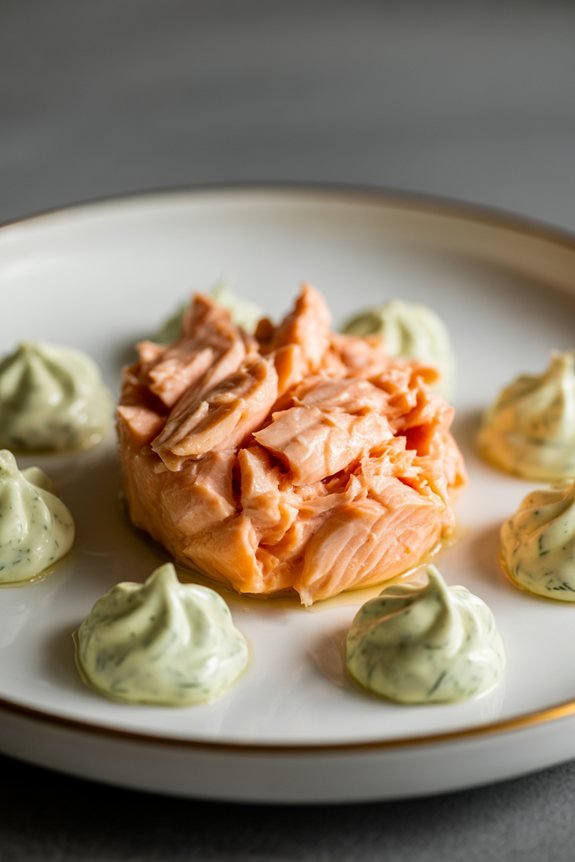
When you’ve preserved your hard-earned salmon, why not raise it from pantry staple to showstopper dish? You’ll transform that humble jar into restaurant-worthy presentations with just a few thoughtful touches.
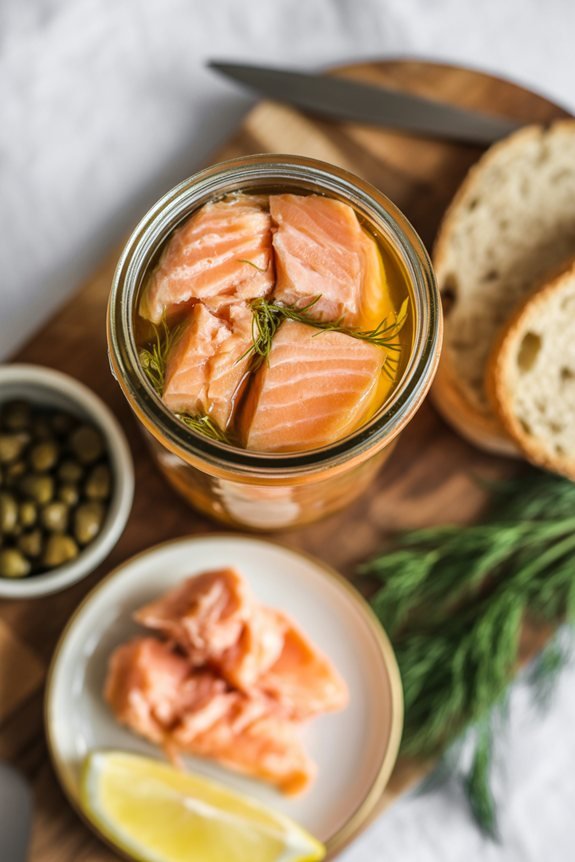
Arrange your drained salmon in a loose mound atop crisp greens or crusty bread. Drizzle with lemon-dill aioli or bright vinaigrette. Add contrasting textures—capers for salt, cucumber for crunch, red onion for bite.
For brunch perfection, flake it over avocado toast with microgreens.
At dinner, toss with pasta and cream. Remember, we eat with our eyes first—a sprig of fresh herbs makes even the simplest plate shine.
Homemade Canned Salmon Substitutions and Variations
While the basic recipe creates a delicious pantry staple, you’ll find endless ways to customize your home-preserved salmon to suit your taste preferences and ingredient availability.
Try adding a sprig of dill, a thin slice of lemon, or a few capers to each jar for bright, tangy notes that’ll transport you to coastal kitchens.
You can substitute apple cider vinegar for white vinegar, offering a slightly fruitier profile. Instead of olive oil, consider coconut oil for a tropical twist or avocado oil for its neutral flavor.
Don’t have catsup? A tablespoon of tomato paste with a pinch of sugar works perfectly!
What to Serve with Homemade Canned Salmon
Homemade canned salmon shines brightest when paired with complementary dishes that highlight its rich, savory profile.
You’ll want to serve it with crisp, acidic elements that cut through its natural oils—think lemon wedges, capers, or a simple arugula salad dressed with vinaigrette.
For heartier meals, try your salmon atop creamy risotto or folded into pasta with a light cream sauce.
It’s also fantastic crumbled over avocado toast or mixed into potato salad for summer gatherings.
Don’t forget classic pairings like cream cheese, dill, and crackers—they’re classics for good reason!
The flavors transport you straight to coastal kitchens.
Final Thoughts
Although the process might seem daunting at first glance, perfecting homemade salmon canning opens up a world of culinary possibilities right in your pantry.
You’ll find yourself reaching for these jars throughout the year, creating memorable meals in minutes that taste of summer’s abundance.
The tradition of preserving salmon connects you to generations past who relied on these techniques before modern refrigeration.
There’s something deeply satisfying about honing this skill—transforming fresh catch into shelf-stable treasure with just salt, vinegar, oil, and time.