Why You’ll Love this Rustic Sourdough Bread Starter
Once you’ve experienced the magic of homemade sourdough bread, there’s simply no going back to store-bought loaves.
This starter creates bread with a complex tang that develops character over time, much like a family heirloom.
You’ll cherish the ritual of feeding your starter, watching it bubble and rise with life.
The aroma alone—yeasty, tangy, and somehow comforting—will fill your kitchen with anticipation.
Best of all, it’s sustainable.
Each time you bake, you’ll reserve a cup to continue the tradition, creating an endless cycle of nourishment that connects you to bakers across generations.
Recipe Information for Rustic Sourdough Bread Starter
Sourdough bread starter is an ancient fermentation technique that creates a living culture of wild yeast and beneficial bacteria, producing bread with distinctive flavor and texture that has been cherished across many cultures for centuries.
- Prep Time: 15 minutes
- Rest Time: 3-4 days initial fermentation, overnight for subsequent batches
- Category: Bread Starter
- Method: Fermentation
- Cuisine: Traditional Artisan Baking
- Yield: Approximately 3 cups starter (with 1 cup reserved for future batches)
What Ingredients are in Rustic Sourdough Bread Starter?
Creating a rustic sourdough bread starter requires just a few simple ingredients that work together to capture wild yeasts and beneficial bacteria from your environment. This living culture develops over several days, establishing the foundation for delicious sourdough bread with complex flavors and chewy texture that can’t be replicated with commercial yeast alone.
- 1 tablespoon package dry yeast
- 2½ cups water
- 2 cups flour
- 1 tablespoon sugar
While commercial yeast helps kickstart the fermentation process in this recipe, over time your starter will develop its own unique microbial ecosystem influenced by your local environment.
You can employ all-purpose flour, but many bakers prefer utilizing unbleached flour or a combination of all-purpose and whole wheat flour to provide more nutrients for the developing microorganisms.
The quality of water matters too—chlorinated tap water may inhibit fermentation, so consider opting for filtered or spring water for best results.
How to Make this Rustic Sourdough Bread Starter
Creating a rustic sourdough bread starter is a rewarding process that requires patience as you nurture wild yeasts and bacteria into a living culture. This traditional method begins with a small amount of commercial yeast to jumpstart fermentation, then develops complexity over several days as it ferments. The process is simple but demands attention to temperature and time to guarantee proper development.
- Dissolve 1 tablespoon package of dry yeast in 1/2 cup warm water and let it rest for ten minutes until it becomes frothy.
- Mix in 2 cups of flour, 1 tablespoon sugar, and the remaining 2 cups of water until well combined.
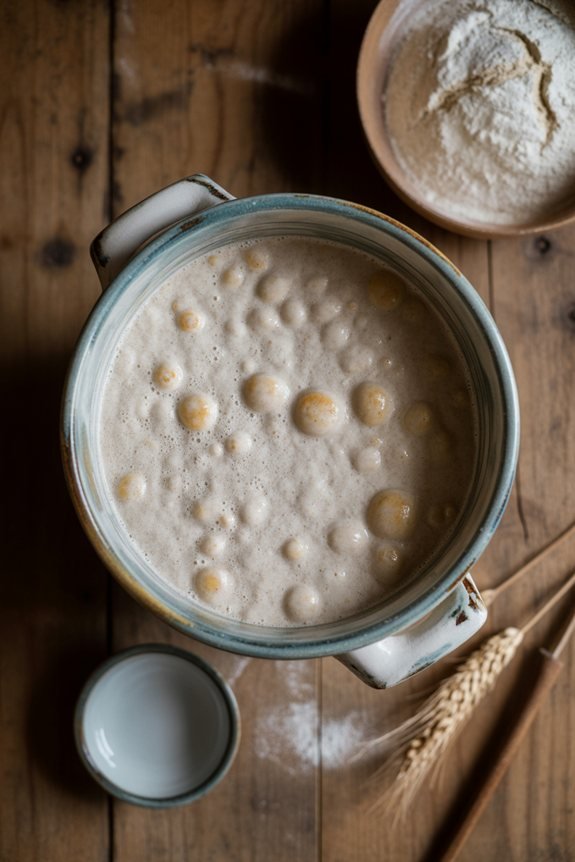
- Transfer the mixture to a large ceramic bowl, as the starter will rise considerably during fermentation.
- Cover the bowl loosely with a clean kitchen towel or plastic wrap to allow airflow while keeping dust out.
- Place the bowl in a warm location (around 70-75°F) for 3 to 4 days, allowing fermentation to develop.
- Once the starter is active and bubbly, reserve 1 cup to utilize as the foundation for future batches.
- Store your reserved starter in a covered container (a pint jar works well) in the refrigerator.
- To reactivate your starter for baking, add 2 cups flour and 2 cups warm water to your reserved cup, then let it stand at room temperature overnight.
- Always remember to save a cup of starter after each use to maintain your continuous sourdough culture.
Using premium bread equipment can significantly improve your sourdough results by providing consistent temperatures and ideal mixing conditions.
With your rustic sourdough starter now prepared and full of life, you’ll want to showcase this living culture in a way that honors the tradition behind this ancient bread-making process.
How to Plate this Rustic Sourdough Bread Starter Like a Chef
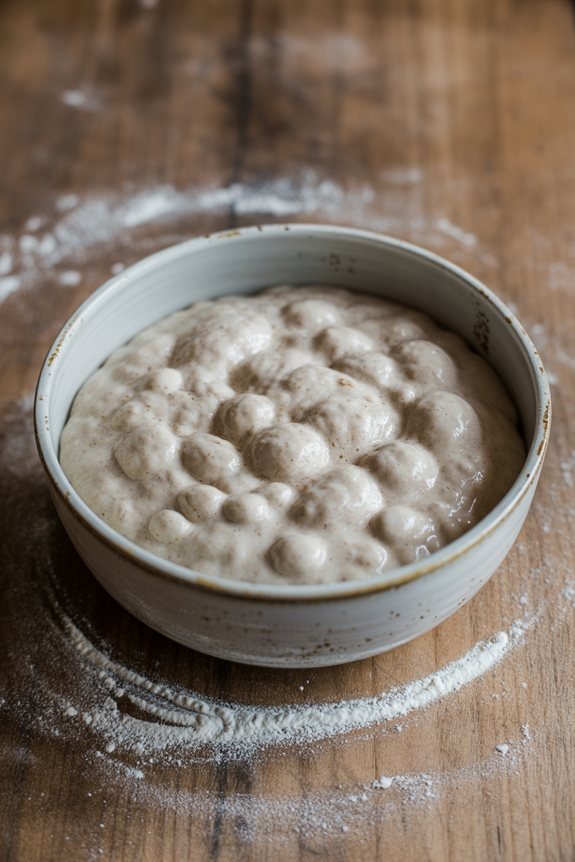
While your starter ferments and develops its complex flavors, why not think ahead to presentation?
Even this humble mixture deserves a moment in the spotlight.
Set your bubbly creation in a handcrafted ceramic bowl, perhaps with subtle earthen tones that complement the starter’s creamy hue.
A small wooden spoon resting alongside suggests rustic tradition.
For professional flair, dust the rim with a whisper of flour and garnish with a sprig of wheat or lavender.
You’ll create a visual story that honors generations of bakers before you.
It’s not just about looks—we eat with our eyes first, connecting us to food’s deeper meaning.
Rustic Sourdough Bread Starter Substitutions and Variations
Although traditional sourdough starter follows a time-honored recipe, you’ll find endless possibilities for customization that can transform your bread’s flavor profile.
Try substituting whole wheat, rye, or spelt flour for depth and complexity. You’re not limited to sugar either—honey, maple syrup, or even a splash of apple juice can kickstart fermentation while adding subtle notes.
For adventurous bakers, add herbs like rosemary or thyme, or experiment with unique liquid bases: potato water creates a wonderfully active starter, while pineapple juice prevents unwanted bacteria in the early stages.
Each variation writes a new chapter in your sourdough story, connecting you to generations of creative bread artisans before us.
What to Serve with Rustic Sourdough Bread Starter
Once your rustic sourdough bread emerges from the oven with its crackling crust and tangy aroma, you’ll want to pair it with companions worthy of its complex flavor profile.
Nothing celebrates this achievement like high-quality butter – cultured if you’re feeling fancy – that slowly melts into those warm, airy pockets.
Hearty soups practically beg for sourdough’s company, especially tomato bisque or beef stew.
A charcuterie board featuring aged cheeses, fig jam, and thinly sliced prosciutto creates an enhanced experience that lets the bread’s fermented notes shine through.
For breakfast? Try it toasted with avocado and a perfectly poached egg.
Final Thoughts
Starting a sourdough bread journey transforms you in ways that reach far beyond the kitchen.
You’ll find yourself checking on your starter like it’s a cherished pet, celebrating its bubbles and watching it respond to seasonal changes. It’s a living connection to bakers across centuries.
You’ve joined a timeless tradition that turns simple flour and water into something magical.
When you share your first perfect loaf, you’re passing along both nourishment and heritage.