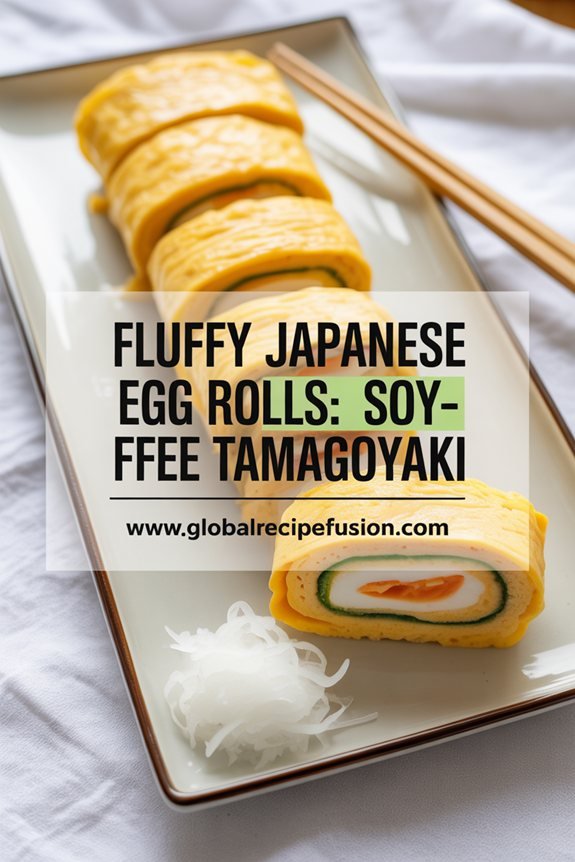
Why You’ll Love these Fluffy Japanese Egg Rolls
Whether you’re craving something distinctly delicious or simply looking to expand your culinary horizons, these Fluffy Japanese Egg Rolls (Tamagoyaki) will capture your heart from the first bite.
They’re incredibly versatile—perfect for breakfast, lunch boxes, or as a protein-rich snack.
You’ll appreciate how these rolls transform simple ingredients into something extraordinary. The delicate balance of sweetness from sugar and umami from coconut aminos creates a captivating flavor profile without any soy products.
Their beautiful golden layers look impressive but require minimal effort. They’re perfect for anyone with soy allergies who still wants to enjoy authentic Japanese flavors.
Recipe Information for Fluffy Japanese Egg Rolls
Tamagoyaki is a traditional Japanese rolled omelet, typically served as part of breakfast or as a component in bento boxes. This soy-free version maintains the authentic rolled technique while using coconut aminos as a flavorful alternative.
- Prep Time: 5 minutes
- Cook Time: 15-20 minutes (plus 15 minutes in oven)
- Category: Breakfast/Side Dish
- Method: Pan-frying and Rolling
- Cuisine: Japanese (Soy-Free Modification)
- Yield: 4 servings
What Ingredients are in Fluffy Japanese Egg Rolls?
These fluffy Japanese egg rolls, also known as Tamagoyaki, require just a few simple ingredients to create their distinctive sweet and savory flavor profile. Traditional Tamagoyaki employs soy sauce, but this soy-free version substitutes coconut aminos for those with soy allergies or dietary restrictions while maintaining the authentic taste.
- 4 eggs
- 1 tablespoon sugar
- 1/2 tablespoon coconut aminos (recommended over Bragg’s liquid aminos)
- Coconut oil (for cooking)
When selecting ingredients for this recipe, quality matters. While the recipe notes that raw eggs are commonly used in Japan, American eggs require thorough cooking for safety reasons. The coconut aminos provide a similar umami flavor to soy sauce but with a slightly sweeter profile that complements the sugar in the mixture. If you’re concerned about sweetness, you can adjust the sugar amount to your preference without compromising the texture of the final dish.
How to Make these Fluffy Japanese Egg Rolls
Making Tamagoyaki requires patience and technique, but the result is a delicately layered egg roll with a perfect balance of sweetness and umami.
The key to attaining the signature fluffy texture lies in cooking thin layers of egg and rolling them together while still slightly runny. This soy-free version substitutes coconut aminos instead of traditional soy sauce, making it accessible for those with dietary restrictions while preserving authentic flavors.
- Whisk 4 eggs, 1 tablespoon sugar, and 1/2 tablespoon coconut aminos together in a bowl until well combined.
- Heat a rectangular tamagoyaki pan (or regular frying pan) over medium heat and add a small amount of coconut oil to coat the surface.
- Pour just enough egg mixture to thinly cover the bottom of the pan, swirling to distribute evenly.
- Gently poke any air bubbles that form to guarantee a smooth texture.
- When the egg is still slightly runny on top, use a spatula to carefully fold one edge over, beginning the rolling process.
- Add another thin layer of egg mixture to the exposed pan surface, lifting the roll slightly to allow the new egg to flow underneath.
- Continue rolling the egg with each new layer until you’ve used all the mixture.
- Transfer the completed roll to a plate or baking sheet.
- Place the egg rolls in a preheated oven at 200°F for about 15 minutes to confirm they’re safely cooked through, as American eggs require thorough cooking unlike their Japanese counterparts.
Using healthy cooking appliances can make preparing authentic Japanese dishes like Tamagoyaki much easier and more efficient.
Once your Tamagoyaki is perfectly cooked with its distinctive layered appearance, it’s time to present this Japanese delicacy in a way that highlights its beautiful structure and golden color.
How to Plate these Fluffy Japanese Egg Rolls Like a Chef
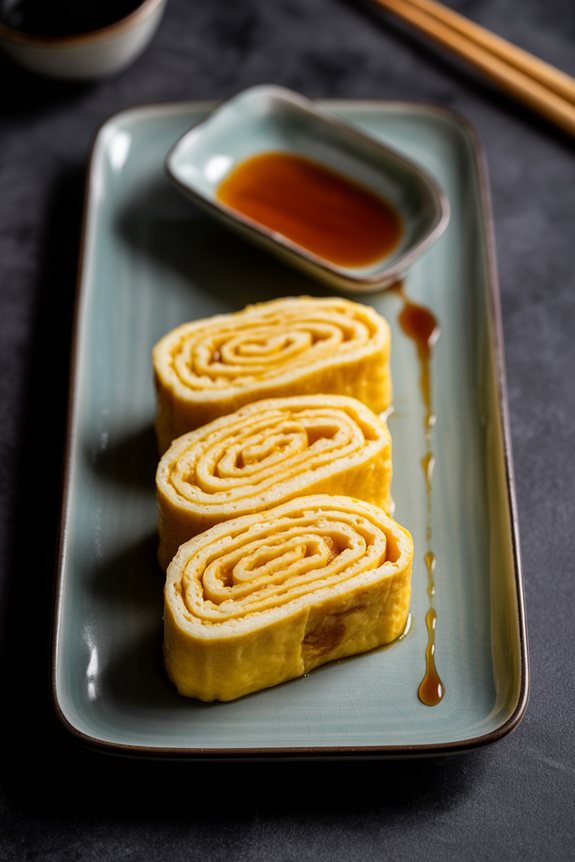
After spending time perfecting your fluffy Japanese egg rolls, presentation becomes the final, essential element that transforms this homemade dish into restaurant-quality cuisine.
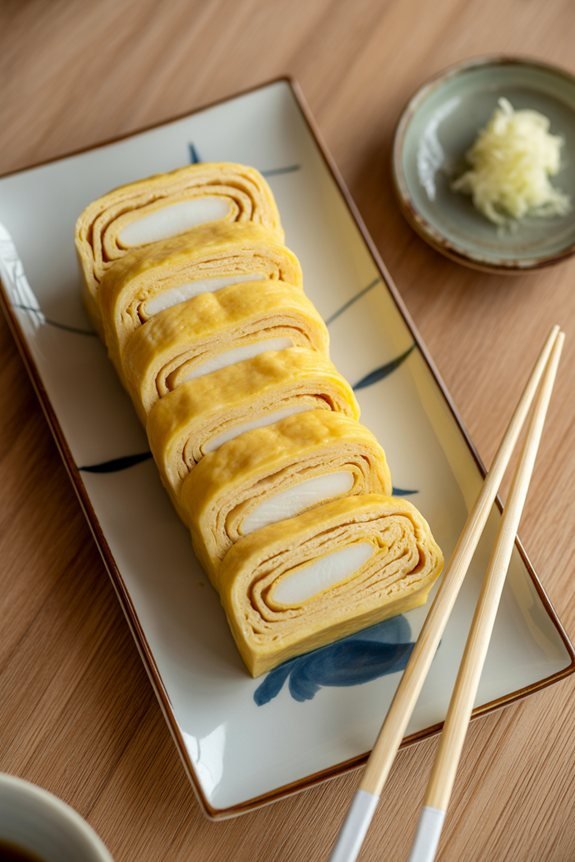
Slice your tamagoyaki into thick, one-inch pieces, revealing those beautiful golden spirals inside.
Arrange them on a small rectangular plate—white ceramic works wonderfully to highlight the vibrant yellow hues.
Add a small mound of grated daikon radish on the side, or garnish with a sprinkle of black sesame seeds for striking contrast.
You’ll feel a flutter of pride when family members gasp at your artful display, just like the ones in Tokyo’s breakfast spots!
Fluffy Japanese Egg Rolls Substitutions and Variations
While traditional tamagoyaki relies on specific Japanese ingredients, you don’t need to feel limited by what’s in your pantry.
The recipe’s coconut aminos brilliantly replace soy sauce, creating that umami depth without allergens. Don’t have coconut aminos? Try fish sauce (use sparingly) or Worcestershire sauce for that savory punch.
The sweetness can vary too. Swap sugar with honey, maple syrup, or monk fruit sweetener. Each brings its own character to the delicate egg layers.
For a heartier version, fold in chopped green onions, tiny cubes of ham, or even a sprinkle of furikake.
The possibilities? Endless!
What to Serve with Fluffy Japanese Egg Rolls
Since these delicate, sweet-savory egg rolls shine as versatile companions to countless dishes, you’ll want to pair them thoughtfully for a balanced meal.
They’re perfect alongside steamed rice and miso soup for a traditional Japanese breakfast that’ll transport you to Tokyo’s bustling morning markets.
Try them sliced atop a bowl of ramen or udon for protein-rich comfort, or positioned beside pickled vegetables for a refreshing contrast.
You can’t go wrong serving them with grilled fish or chicken for dinner either.
For a modern twist, these egg rolls make adorable sandwich fillers or bento box stars that’ll have your family begging for seconds!
Final Thoughts
Three wonderful qualities make these fluffy Japanese egg rolls truly special: their delicate texture, versatile flavor profile, and cultural significance.
You’ll find that soy-free tamagoyaki brings traditional Japanese cuisine into your kitchen while accommodating modern dietary needs.
Don’t be intimidated by the rolling technique—it gets easier with practice! Remember, the final baking step is essential for American eggs, unlike in Japan where eggs can safely remain raw.
Whether you’re serving these golden delights for breakfast, in a bento box, or as a party appetizer, you’re connecting with centuries of culinary tradition while creating new memories around your table.