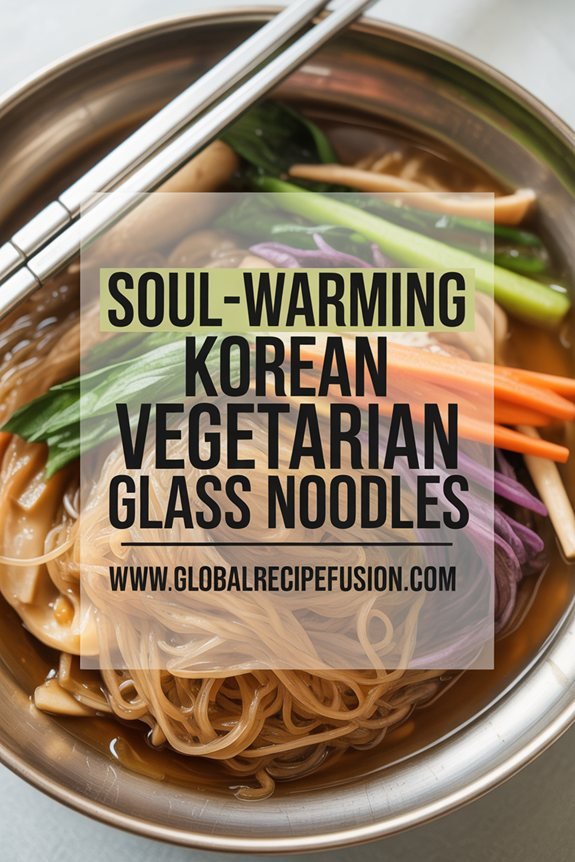
Why You’ll Love these Soul-Warming Korean Vegetarian Glass Noodles
Have you ever craved a dish that’s both comforting and vibrant, filling yet light enough to leave you invigorated? That’s jap chae—Korea’s beloved glass noodle stir-fry that satisfies on every level.
You’ll love how these translucent, slightly chewy noodles absorb the perfect balance of savory soy sauce and nutty sesame oil.
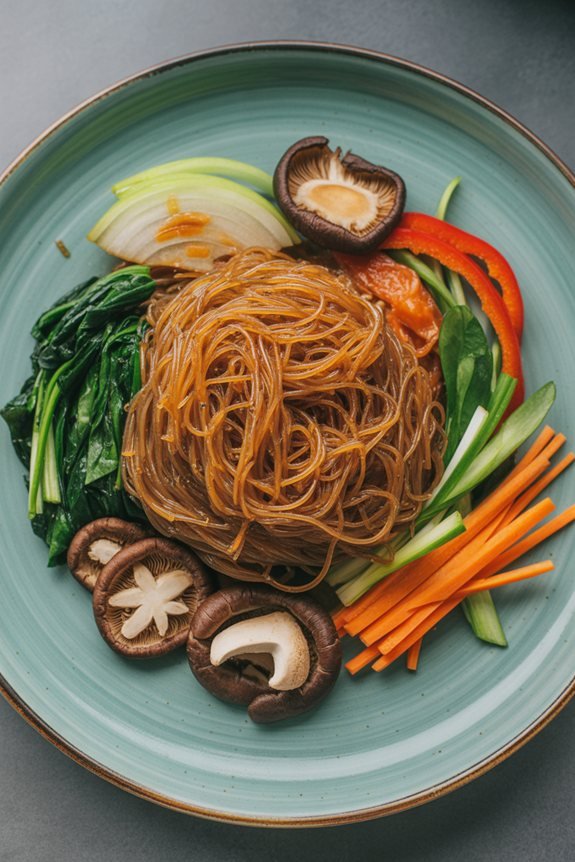
The colorful medley of vegetables—crisp carrots, tender spinach, earthy mushrooms—creates a feast for your eyes before delighting your taste buds.
It’s versatile too! Enjoy it piping hot on chilly evenings or refreshingly cool in summer.
Plus, this vegetarian version, with its protein-rich tofu cubes, offers all the traditional flavor without meat.
Recipe Information for Soul-Warming Korean Vegetarian Glass Noodles
Jap chae is a traditional Korean dish featuring sweet potato glass noodles stir-fried with vegetables in a savory-sweet sauce, making it a perfect blend of textures and flavors that’s beloved throughout Korea.
- Prep Time: 20 minutes
- Cook Time: 15 minutes
- Category: Main Dish
- Method: Stir-fry
- Cuisine: Korean
- Yield: 4 servings
What Ingredients are in Soul-Warming Korean Vegetarian Glass Noodles?
Jap Chae, a beloved Korean dish, features a harmonious combination of chewy glass noodles (dangmyeon) and colorful vegetables, all linked with a flavorful sesame-soy sauce. This vegetarian modification maintains the authentic taste and texture while offering a plant-based option that’s both satisfying and nutritious.
- 14 ounces cellophane noodles (dangmyeon)
- 1/2 bunch fresh spinach
- 1/2 medium yellow onion, sliced into half-rings
- 1 carrot, cut into matchsticks
- 1/2 red bell pepper, sliced
- 8-10 fresh shiitake mushrooms, sliced
- 2 stalks green onions (green parts only), cut into 1 1/2-inch pieces
- 8 ounces firm tofu, cut into 1-inch cubes
- 2 garlic cloves, minced
- Olive oil
- 4 tablespoons soy sauce
- 4 tablespoons toasted sesame oil
- Sea salt and freshly ground pepper
- 2 tablespoons sugar
- 3 tablespoons toasted sesame seeds
When shopping for ingredients, the glass noodles (dangmyeon) are the cornerstone of authentic jap chae and can be found at Korean grocery stores or Asian markets. These sweet potato starch noodles have a distinctively chewy texture that distinguishes them from other types of Asian noodles. For the best flavor, select fresh shiitake mushrooms rather than dried, and don’t skimp on the toasted sesame oil, which provides the distinctive nutty aroma essential to this dish.
How to Make these Soul-Warming Korean Vegetarian Glass Noodles
Creating vegetarian jap chae involves a methodical process of preparing each ingredient separately before merging them in a flavorful finale. The key is cooking each vegetable briefly to maintain its texture and color, then bringing everything along with a savory sesame-soy sauce. This approach preserves the distinctive qualities of each element while allowing them to harmonize in the finished dish, resulting in a colorful medley with contrasting textures and complex flavors. Using kitchen appliances designed for plant-based protein preparation can streamline this process significantly.
- Boil one 14-ounce package of cellophane noodles for 5 minutes until softened and al dente. Drain without rinsing, then place in a large bowl and cut three times with kitchen scissors.
- Season the noodles with 2 tablespoons each of soy sauce and sesame oil, tossing until evenly coated.
- Using the same pot, boil 1/2 bunch of fresh spinach for 1 minute. Cool slightly, squeeze out excess water, cut into thirds, and season with 1 teaspoon sesame oil, a pinch of salt, and pepper. Add to the noodle bowl.
- Heat a wok or large frying pan on high with 1 teaspoon olive oil. Cook 1/2 medium yellow onion (sliced into rings, cut in half) for 2 minutes until translucent, season with 1/2 teaspoon sesame oil, salt, and pepper, then add to noodles.
- Repeat step 4 for each vegetable: cook 1 carrot (matchsticks) for 30 seconds, 1/2 red bell pepper (sliced) for 2 minutes, 8-10 sliced shiitake mushrooms for 1 minute, and 2 stalks of green onions for 10 seconds.
- Fry 8 ounces of firm tofu cubes for 1 minute per side, but set aside separately.
- Add remaining 2 tablespoons soy sauce, 1 tablespoon sesame oil, 2 tablespoons sugar, and 1/2 teaspoon ground pepper to the noodle mixture and toss well.
- Heat 1 tablespoon olive oil in the wok, sauté 2 minced garlic cloves briefly, then add the entire noodle and vegetable mixture.
- Stir-fry everything for 2-3 minutes, then turn off heat and gently fold in the tofu.
Now that your jap chae is perfectly cooked, with each ingredient maintaining its distinct texture while harmonizing with the savory sauce, it’s time to present this colorful dish for maximum visual impact.
How to Plate these Soul-Warming Korean Vegetarian Glass Noodles Like a Chef
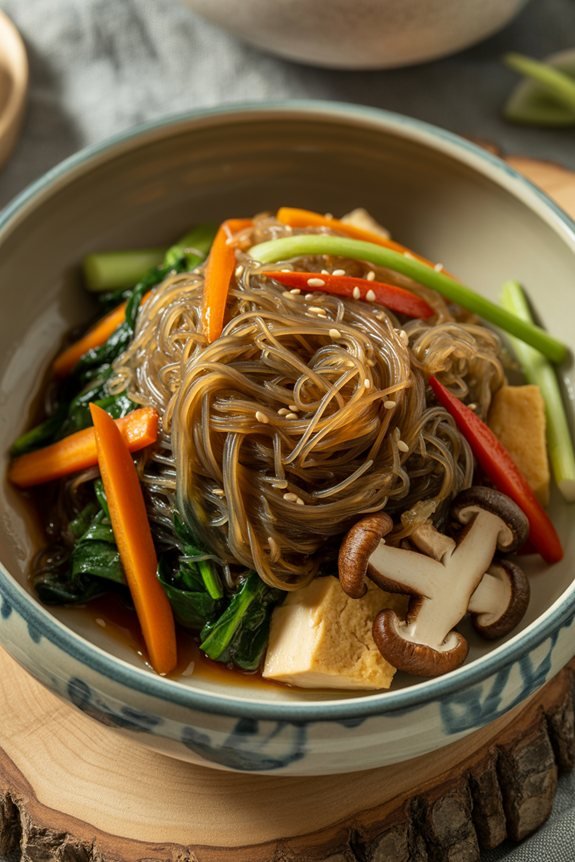
When elevating your vegetarian jap chae from home cooking to restaurant-quality presentation, the visual composition becomes just as vital as the flavor.
Transfer your noodles to a wide, shallow bowl or plate with a slight rim, allowing the colorful vegetables to shine against a neutral backdrop.
Arrange the tofu cubes deliberately around the edge, creating visual anchors.
With chopsticks, gently twirl a small portion of noodles into a loose nest at the center.
Sprinkle sesame seeds primarily over this central mound, allowing a few to scatter artfully.
A single green onion spear, placed diagonally, adds that final chef’s touch.
Soul-Warming Korean Vegetarian Glass Noodles Substitutions and Variations
Beyond the classic recipe lies a world of flexible possibilities for your vegetarian jap chae.
You can swap the shiitake mushrooms for earthy cremini or meaty portobello.
Don’t have red bell peppers? Yellow or orange deliver the same vibrant sweetness.
If tofu isn’t your preference, try adding tempeh or seitan for a chewier protein alternative.
Can’t find dangmyeon noodles? Sweet potato starch noodles can often be labeled as Korean vermicelli or simply glass noodles.
For a spicier kick, stir in gochujang (Korean chili paste) to taste.
What to Serve with Soul-Warming Korean Vegetarian Glass Noodles
Three perfect companions uplift your soul-warming Korean vegetarian glass noodles from a simple dish to a complete feast.
First, consider kimchi—that fermented, spicy cabbage offers a tangy contrast to the umami-rich jap chae.
Second, a light cucumber salad dressed with rice vinegar and toasted sesame seeds will cleanse your palate between bites.
Finally, don’t overlook a traditional Korean tea like barley tea (boricha) to aid digestion.
These sides create balance, following the Korean principle of harmony in meals.
The cool, crisp textures complement your noodles’ chewy satisfaction, while the flavors dance between spicy, refreshing, and earthy.
Final Thoughts
Our journey through the world of Korean vegetarian glass noodles wouldn’t be complete without reflecting on what makes this dish so special.
Jap Chae isn’t just food—it’s a celebration of texture and flavor that connects you to centuries of Korean culinary tradition.
You’ll find yourself coming back to this recipe when you crave something both comforting and impressive. The springy noodles, caramelized vegetables, and umami-rich sauce create a symphony that’s greater than its parts.
Whether served as a family dinner centerpiece or packed for tomorrow’s lunch, these noodles remind us that vegetarian cooking can be deeply satisfying and joyfully complex.